Post details: Private equity and M&A booming in healthcare

Google
 

Private equity and M&A booming in healthcare

April 13th, 2007

by Tony Chen

Is it me or has there been a tidal wave of healthcare-related private equity and investment deals recently?

Here are the highlights of recent healthcare private equity & privatization activities:
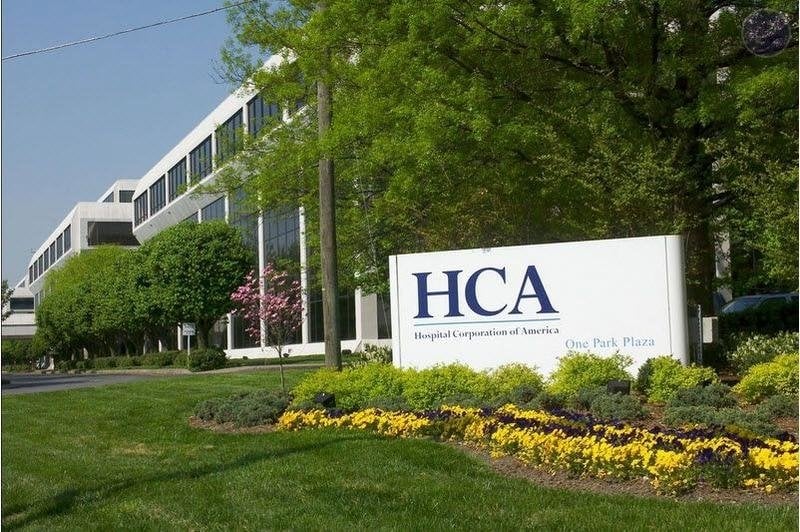
- HCA went private for $21B - the biggest LBO in history at the time.
- USPI went private for $1.8B - by far, they are the largest surgery center operator in the country
- Texas Pacific Group, a private equity firm, bought HealthSouth's surgery division for $945M
- Many speculate that we aren't done yet. I'm betting on LifePoint as the next big deal to break - this would be ~$2.5B deal.

On the M&A side of things, there's been quite a bit of activity
- Triad & CHS $7.1B Merger (which really could count as a privatization)
- CVS bought MinuteClinic for $180MM or so. I think this signals a strategic bet from CVS management - they think that healthcare is the product/service differentiator they've been looking for to drive the next wave of in-store traffic growth.
- Hospitals also continue to buy each other out - there has been a lot of activity of late. 2006 was a banner year with 57 hospital transactions. Since the bottom-out of 2003, hospitals continue to be active. Turned-around or desperate-for-a-turnaround hospitals are the most attractive targets.
- Maybe the hottest area (but under the radar) is senior care - more are opening and many are being bought out at record prices. There's less red tape, a lot of market fragmentation, and baby boomers flooding the gates.

I won't even get into the other sectors of healthcare, except to say that CVS bought Caremark for $26.5B and Pharma companies announced 10 deals in February worth $7.5B. It's a good time to be a dealmaker.

What all of this tells me is this:
* We shouldn't be surprised as this is a cyclical phenomena. I've heard experts talk of the 10-year cycle, and right now we are on the upswing.
* I don't think this is specific to healthcare, though healthcare is one of the hottest sectors right now for VCs.
* The outsiders (the financiers) and the insiders (hospital leadership) are looking at the same businesses. But the outsiders see more value in these businesses. Is the hospital industry going through a strategy make-over?

Comments:

Comment from: Self Help Zone [Visitor] · http://www.selfhelpzone.com/
Wow... Who's going to search for anything in if they want to know information about hospital??? Do you know where they will here they will come here on this place to know about it.....great job ...keep the good work going.....and add new readers like me to your blog...Thank you for sharing....just wanted to say hi....
Permalink 04/13/07 @ 09:46
Comment from: Joseph Kirchner [Visitor] · http://www.mvrmc.org
"But the outsiders see more value in these businesses. Is the hospital industry going through a strategy make-over?"
Very astute observation. Are you aware of any literature on the ability of non-profits, relative to for-profits, to adequately respond to such change?
Permalink 04/13/07 @ 11:18
Comment from: hospitaltony [Member]
Joseph, I haven't seen any literature or data that this is the case. How do you measure "market responsiveness?" Profitability might be a good measure, but taxes/reimbursement skew it.
Permalink 04/13/07 @ 11:25
Comment from: Hospital CEO [Visitor]
Tony,

As someone who has worked as for for-profit ceo for two decades let me offer my insights. First, there is significant pressure in the industry, by shareholders and private equity entities to continue to show increased profitability. That incresed profitability comes from, same store incresed in net profit, acquiring new facilities or merging. With decreases in reimbursement and fewer great non-profit hospitals to acquire one means still available is to become more efficient through merging. Another alternative is to buy other for-profit entities.

From an shareholder perspective, healthcare has always been seen as a safe investment. Note that when the stockmarket is going down, most often healthcare stocks increase in value.

Last, Vern Weckwerth penned an excellent article comparing for-profit and non-proft heatlhcare facilites. Again, from my perspective, for-profit hospitals focus on product line expansion, physican recruitment, capital investments such as new emergency rooms, equipment, additional beds, coding and operational efficiencies. As I have personally taken over the leadership of newly acquired hospitals, the former non-profit adminstrators could have done the same relative to operational efficiencies had they been willing to withstand the flack that comes from triming employees.

Finally, I do want want to convey that I believe that for-profit healthcare is the way to go. But, for-profit healthcare has kept some hospitals open whereas they would have closed had they not been acquired. Actually, each would learn from the other. For-profits could benefit by focusing more on having satisfied employees and non-profits could benefit by being more focued on growing their market share through physician recuitment and new product line development.

Thanks for an interesting blog.
Permalink 04/14/07 @ 09:50
Comment from: Nick Jacobs [Visitor] · http://windberblog.typepad.com
Tony,

I absolutely agree with the For Profit comment from the Hosptial CEO visitor. I've lived in both worlds, and prefer the not for profit sector because it doesn't require me to make resource allocation decisions based upon stock holder profitability.

Yes, we could have 20% fewer employees and pull all of that money to the bottom line. We could eliminate OB and cut out community health efforts. We could do plenty of things to turn a buck, and, believe me, the for profit CEO's understand this completely. It's the non profit CEO's who act this way that make me nervous. Cash is king, and walking a fine line between success and community good is often times a major challenge.
Permalink 04/15/07 @ 18:04
Comment from: Tim Gee [Visitor] · http://www.medicalconnectivity.com
Health care as an industry is especially resistant to change, be they attending physicians, nurses and techs or hospital administrators. The real opportunity - and what will be demanded by new owners from outside health care - is to make fundamental changes in how care is delivered. These changes will reduce costs while improving patient safety and outcomes.
This is not a game of reducing head count and trying to do the same old things with fewer people. That is a recipe for disaster. The bolus of baby boomers will drive a lot of changes, and those that thrive and excel in the future will be those that embrace change .
Permalink 04/17/07 @ 13:08
Comment from: Hospital CEO [Visitor]
For those interested in pursuing an article I referenced earlier by Vernon Weckwerth, PhD it was published in the Frontiers of Health Services Management 22:4.

Vern is the Dean of the Independent Studies Program (MHA) at the University of Minnesota. His article and others in that publication focused on the differences between for-profit and non-profit healthcare facilities.

Permalink 04/19/07 @ 11:12
Comment from: Healthcare Venture Capitalist [Visitor]
As someone who has been involved in healthcare on all four ends (patient, individual provider, financier, and operational provider), I disagree with virtually every single one of Tony's (CEO) comments.

The current trend in LBOs is not due to the pressure to deliver shareholder value so much as it is the exploitative nature of the LBO business. Taking companies private allows them to hide their financials and operating procedures. This is precisely why there have been many large buyouts of highly profitable companies recently (eso TXU and Sallie Mae). It allows these companies to carry on with their deceit and fraud. You won't see this theory in journals because academia is clueless. Use must use your own common sense if you want to understand things.

All of healthcare in America is in crisis. In short, healhcare is the biggest problem this nation faces, responsible for the record outsourcing trend we see today.

Healthcare is NOT a safe investment. If you are defining healthcare as medical services, it is by no means safe because that segment is run as poorly as the Big 3. The only difference is that medical services in America have an effective monopoly due to geograhphical advantages, which makes most large entities profitable.
Tony, I hope you are not managing your own assets. As a former institutional asset manager and merchant banker, I understand market dynamics well. You have implied that healthcare has a negative correlation to other traditional asset classes. Absolutely inaccurate. Only gold (and other precious metals) and REITS have clear negative correlations to these assets.

Permalink 04/26/07 @ 00:51
Comment from: Mark [Visitor]
Knowing healthcare industry is a very complicated and delicate one, I was wondering if anyone has any specific tips (i.e. operations questions to ask during acquisition process) or websites that offer such tips.
Permalink 06/04/08 @ 01:33

Leave a comment:

Your email address will not be displayed on this site.
Your URL will be displayed.
Allowed XHTML tags: <p, ul, ol, li, dl, dt, dd, address, blockquote, ins, del, a, span, bdo, br, em, strong, dfn, code, samp, kdb, var, cite, abbr, acronym, q, sub, sup, tt, i, b, big, small>
URLs, email, AIM and ICQs will be converted automatically.

authimage

Options:
 
(Line breaks become <br />)
(Set cookies for name, email & url)

Google